-
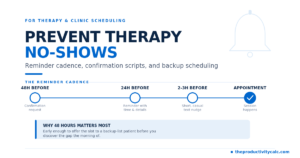
Therapy No-Shows: Prevention, Scripts, and Backup Scheduling
A single no-show doesn’t just cost one session — it costs the productivity math for the entire day. Since most schedules aren’t built with slack for unfilled gaps. Reducing…
-
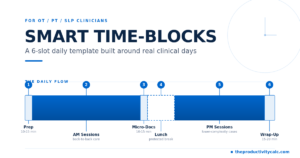
Smart Time-Blocks for OT, PT, and SLP: A 6-Slot Daily Template
Generic time-blocking advice tends to assume a desk job with flexible meeting times. Clinical days don’t work that way — sessions are fixed. Patients don’t reschedule around your ideal…
-
How to Calculate Productivity (Why the Textbook Formula Isn’t Enough)
Most guides hand you one formula and call it a day: output divided by input. That’s not wrong. But if your work runs on a clock instead of a…
-
How to Calculate Therapy Productivity | Full Guide
If you’ve ever finished a full day of patients and still felt behind on your productivity number, you’re not imagining it. Productivity in a clinical setting isn’t just “how…
-
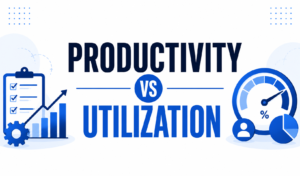
Productivity vs Utilization
Managers use these two words like they mean the same thing. They don’t. A therapist can post strong productivity numbers on a week with terrible utilization, and a clinic…
-
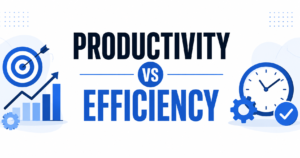
Productivity vs Efficiency
You can be productive without being efficient, and efficient without being productive. That sounds like a riddle, but it’s a real pattern that shows up constantly in therapy, healthcare,…
-
Productivity vs Billable Time
These two get used interchangeably so often that people forget one is actually a piece of the other. Billable time is a raw number. Productivity is a ratio built…
-
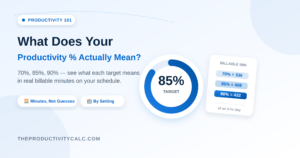
What Does Your Productivity Percentage Actually Mean?
A productivity target is just a percentage until someone converts it into real minutes on your actual schedule. Most explanations stop at the math and skip the part that…
-
PTA Productivity Calculator
One shift rarely tells you the whole story. A slow Tuesday doesn’t mean your week is off track, and a strong Friday doesn’t erase a rough Monday — but…
-
Weekly Review for Clinicians: A 25-Minute Ritual That is on Track
Daily fixes — a faster transition routine, a better documentation habit — only go so far without something that checks whether they’re actually working. A short weekly review for…
-
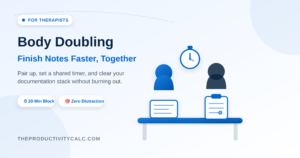
Body Doubling for Therapists: Finish Notes Faster
If you’ve ever sat down to write progress notes and found yourself scrolling your phone ten minutes later, you’re not lacking discipline — you’re missing structure. That’s where body…
-
The 2-Minute Micro-Break Protocol for OT, PT, and SLP Clinicians
Most therapists don’t get a real break between sessions — they get a hallway, a chart, and about ninety seconds before the next patient is waiting. The problem isn’t…
-
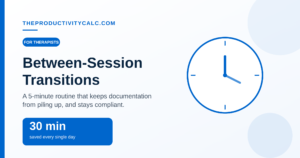
Between-Session Transitions: Save 30 Minutes a Day
The minutes between sessions feel too short to matter — which is exactly why most clinicians waste them. Multiply a wasted 3–4 minutes by eight sessions a day, and…
-
AI for Therapy Notes: What Helps and What to Avoid
AI tools promise to cut documentation time dramatically, and for some tasks they genuinely do. But “AI can write my notes” and “AI can safely write my notes” are…
-
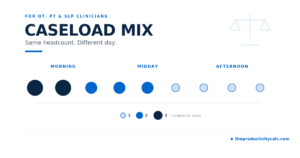
Caseload Mix 101: Balancing High-Need and Low-Need Patients
Two therapists can carry the same number of patients per day and have completely different experiences — one drained by 2 p.m., the other steady through closing. The difference…
-
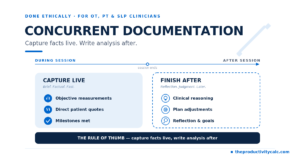
Concurrent Documentation, Done Ethically
Concurrent documentation — writing notes during a session rather than entirely after it. It is one of the most effective time-savers in clinical practice. Also one of the easiest…
-
Energy-Based Scheduling: Put Tough Sessions in Your Peak Hours
Most clinical schedules are built around one variable: availability. Whoever’s open at 10 a.m. gets the 10 a.m. slot, regardless of what that session actually demands. Energy-based scheduling for…