Smart Time-Blocks for OT, PT, and SLP: A 6-Slot Daily Template
Generic time-blocking advice tends to assume a desk job with flexible meeting times. Clinical days don’t work that way — sessions are fixed. Patients don’t reschedule around your ideal focus block, and documentation has to fit into whatever’s left. This time block template for therapists is built around that reality instead of against it.
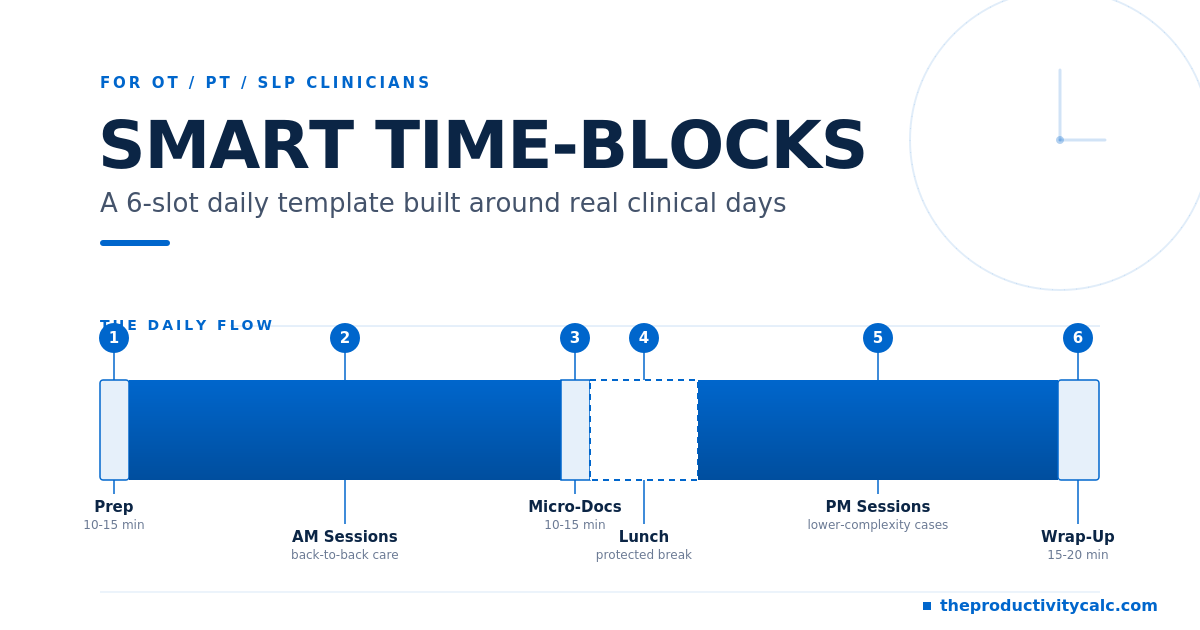
The 6 Slots
- Prep (10–15 min, start of day) — Load templates for the day’s notes, review any flagged items from yesterday, set up equipment for the first session.
- AM Sessions — Back-to-back patient care, with a short reset between each.
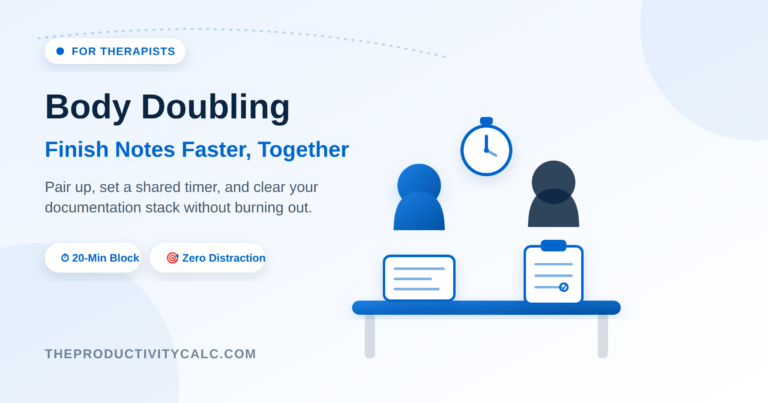
- Micro-Docs (10–15 min, mid-morning) — A short block to convert flagged notes into full documentation before the backlog grows. Not a full catch-up — just enough to stay ahead.
- Lunch (protected, full break) — Not a working lunch. This is the one block in the day where “no documentation” should be a hard rule.
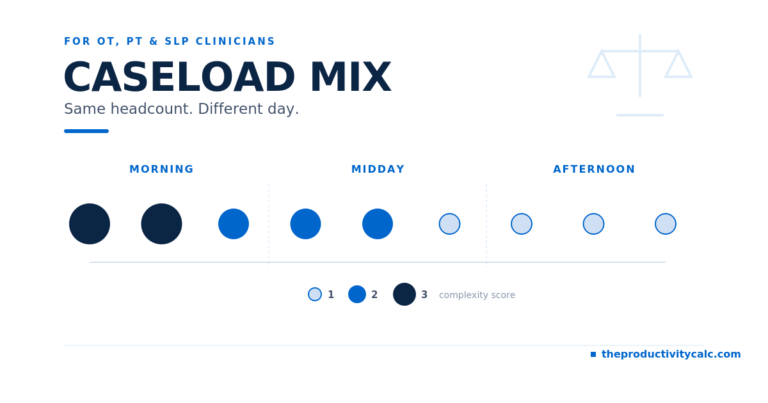
- PM Sessions — Same structure as AM, ideally with lower-complexity cases scheduled here per energy-based scheduling principles.
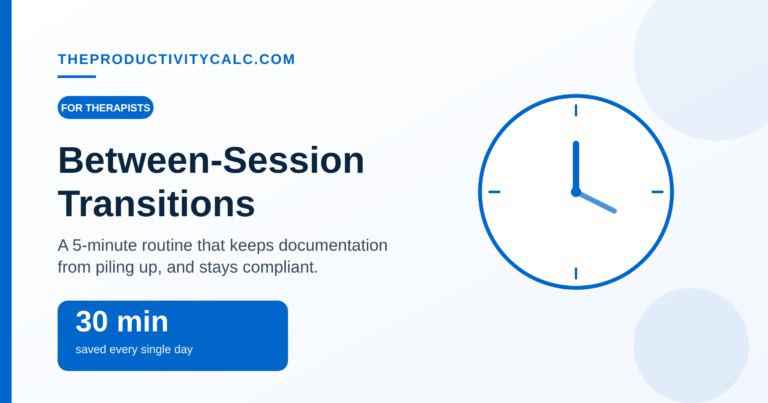
- Wrap-Up (15–20 min, end of day) — Finish remaining notes, confirm tomorrow’s schedule, quick room/equipment reset for the next day.
Adapting the Template to Your Actual Caseload
The template is a skeleton, not a fixed rule. If your setting runs shorter sessions with more patients per day, the Micro-Docs block may need to happen twice (mid-morning and mid-afternoon) rather than once. Check the official CMS 8-minute rule documentation alongside your real session count and length using an 8-Minute Rule Calculator to see where a second documentation block would actually fit.
Tracking Whether the Template Is Actually Working
A time-block template for therapists is only useful if it changes your real numbers. After a week of using it, compare your total documentation time and end-of-day finish time against a typical week using a time efficiency calculator or weekly timesheet hours calculator.