Body Doubling for Therapists: Finish Notes Faster
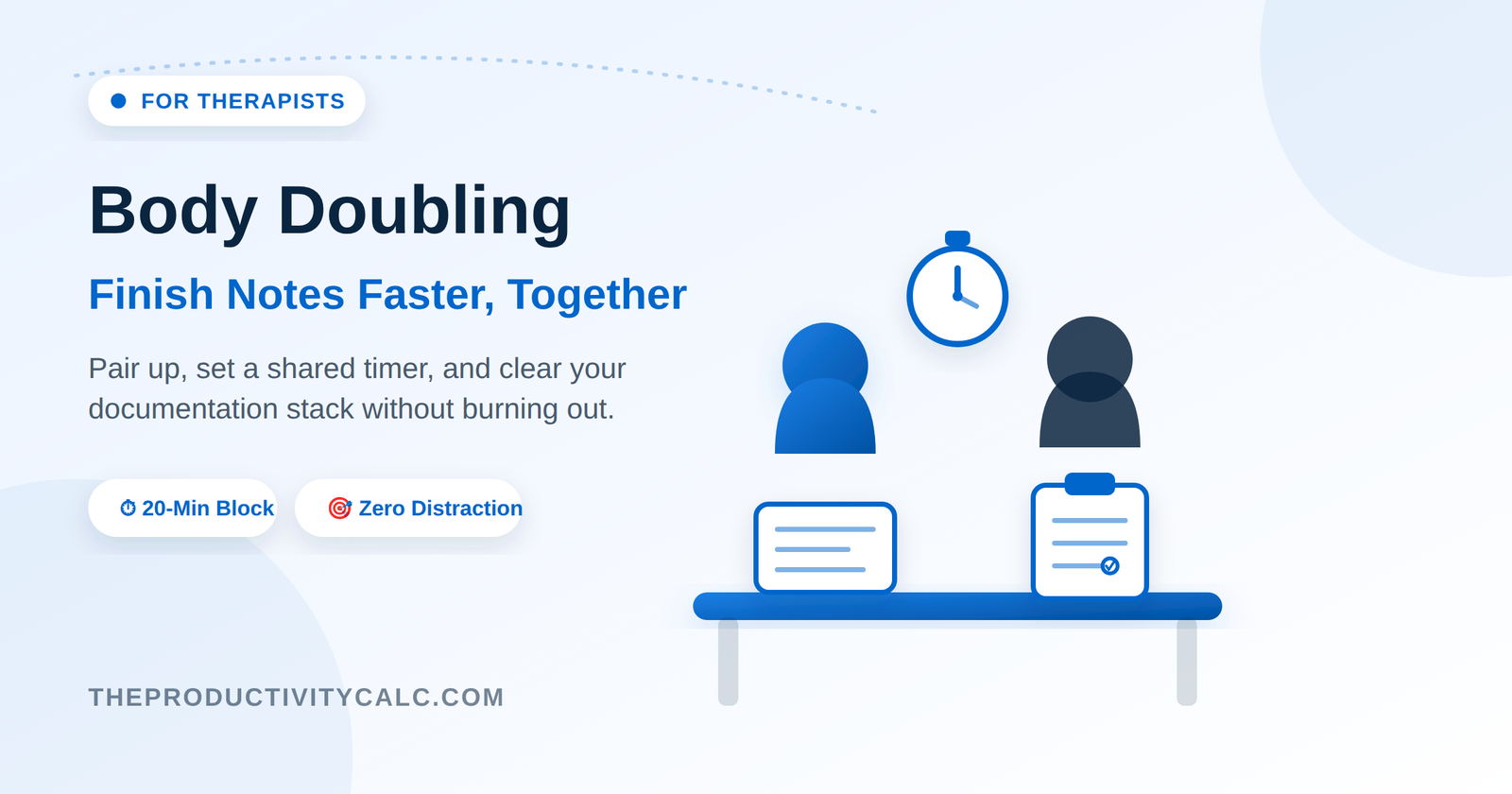
If you’ve ever sat down to write progress notes and found yourself scrolling your phone ten minutes later, you’re not lacking discipline — you’re missing structure. That’s where body doubling comes in.
What Is Body Doubling?
Body doubling means working alongside another person — in person or on a video call. You each do your own separate task. Neither of you is helping the other directly. The other person’s presence alone is what keeps you anchored to the task.
It’s widely used by people with ADHD to combat task paralysis, but it works for almost anyone facing a task that feels tedious or easy to avoid — like end-of-day documentation.
Why It Works for Therapy Documentation Specifically
Progress notes are a strange kind of task: they’re not hard, but they’re not stimulating either. That combination — low difficulty, low engagement — is exactly the profile of task that gets pushed to “later,” which usually means after your shift is technically over.
Body doubling short-circuits that avoidance in a few ways:
- Social accountability removes the temptation to check your phone or open another tab
- A shared start and end time creates a natural deadline, similar to a timed session
- Reduced decision fatigue — you’re not deciding whether to start, just showing up
How to Set It Up in a Clinic
You don’t need an app or a formal program. A few practical options:
- Pair up with a coworker for the last 15–20 minutes of the day, and both write notes at the same table
- Use a video call with a colleague at another site if you work remotely or across locations
- Set a shared timer — even without talking, starting and stopping together adds structure
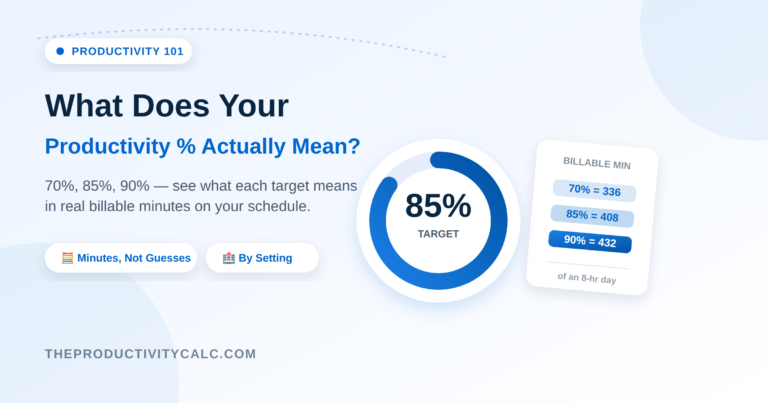
If your team already reviews daily productivity numbers using a productivity percentage calculator, consider pairing documentation time with that review — it turns a solo chore into a shared, lightly social routine.
A Simple 20-Minute Body Doubling Block
- 0–2 min: Both people open their note templates, no talking
- 2–15 min: Silent, focused documentation
- 15–20 min: Quick check-in — anything unfinished gets flagged, not fixed
This keeps the block short enough that it doesn’t feel like a meeting, but long enough to actually clear a stack of notes.
When Body Doubling Isn’t Enough
If notes are consistently spilling past your shift regardless of who’s in the room, the issue may not be focus — it might be that your caseload and time allotted don’t match. That’s worth checking with a caseload calculator or a time efficiency calculator before assuming the fix is purely behavioral.