Weekly Review for Clinicians: A 25-Minute Ritual That Keeps You On Track
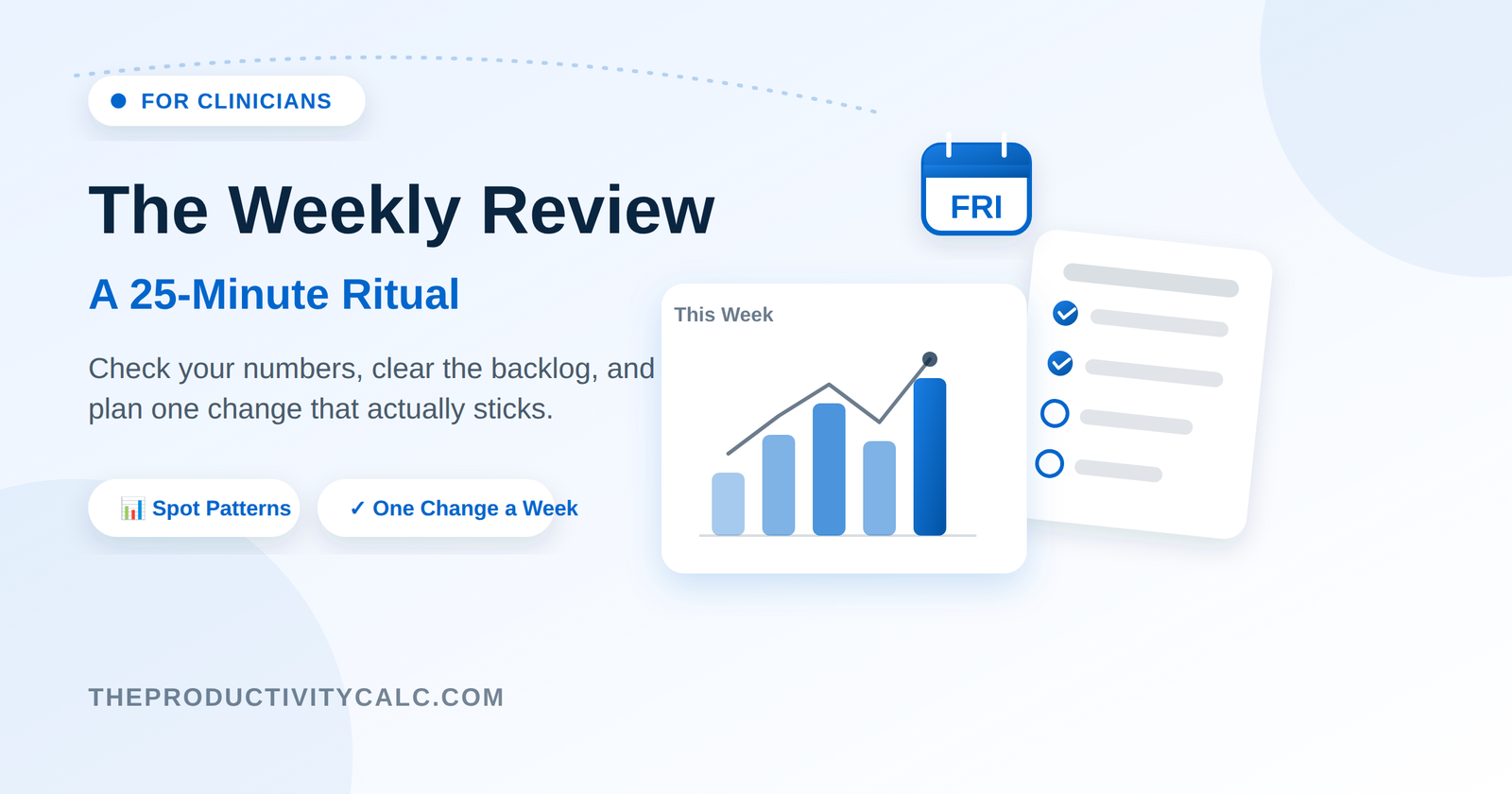
Daily fixes — a faster transition routine, a better documentation habit — only go so far without something that checks whether they’re actually working. A short weekly review for clinicians closes that loop: it’s the difference between guessing your week went fine and knowing it.
Why Weekly, Not Daily or Monthly
Daily check-ins are too noisy — one bad day skews the picture. Monthly reviews are too slow to catch a drifting pattern before it becomes a habit. Weekly sits in the middle: enough data to see a real trend, soon enough to correct course before next week repeats the same problem
The 25-Minute Structure
Minutes 0–5 — Pull the numbers. Check your productivity percentage for the week using a productivity percentage calculator, and note any days that stand out as unusually high or low.
Minutes 5–10 — Clear documentation backlog. Anything still flagged-but-unfinished from the week gets finished now, not carried into next week.
Minutes 10–15 — Spot the pattern. Was there a specific day or time block where things consistently slipped? Cross-reference against your caseload mix or energy-based scheduling notes if you’re using either.
Minutes 15–20 — Plan next week’s mix. Using what you noticed, adjust upcoming complexity placement or flag scheduling conflicts before the week starts, not mid-week.
Minutes 20–25 — One change, not five. Pick a single adjustment to try next week. Reviewing five problems and trying to fix all of them at once usually means none of them stick.
Why “One Change” Matters More Than It Seems
It’s tempting to use a review to overhaul the whole week. In practice, clinicians who commit to one specific, trackable change (e.g., “protect the Micro-Docs block on Tuesdays and Thursdays”) see it stick far more often than those who list several changes at once. The review cadence itself provides the correction mechanism — you don’t need to fix everything in one sitting.
What to Do When the Numbers Look Fine
A clean week doesn’t mean skip the review — it means the review is shorter. Confirming that a good week was actually good (not just “not bad enough to notice”) is still useful data, and it tells you what’s working well enough to keep doing on purpose rather than by accident.
Making It a Habit, Not a Task
The ritual only works if it survives busy weeks. Anchor it to something fixed — end of day Friday, or first thing Monday — rather than “whenever there’s time,” which tends to mean never during a genuinely busy stretch. If you want a formal benchmark to compare against, most disciplines publish official productivity standards worth reviewing once a year.